
Building The First Prototype
HELLO Alki Watercraft insiders! This month's newsletter will focus on the build of our half scale prototype, Little Tahoma. As always we are grateful for your support and interest, and we can't wait to make these revolutionary new watercraft a reality.
Little Tahoma was designed to fit inside a 4'x8'x2' block of foam so that molds could be machined from readily available materials and fit within the work envelope of the 5-axis router that was available to use. Therefore some compromises had to be made, and it's far from an "optimal" design for a dinghy or tender. But, it was possible to come up with a design that demonstrated all the key design and manufacturing elements we wanted to test. For more on that, check out last month's newsletter!
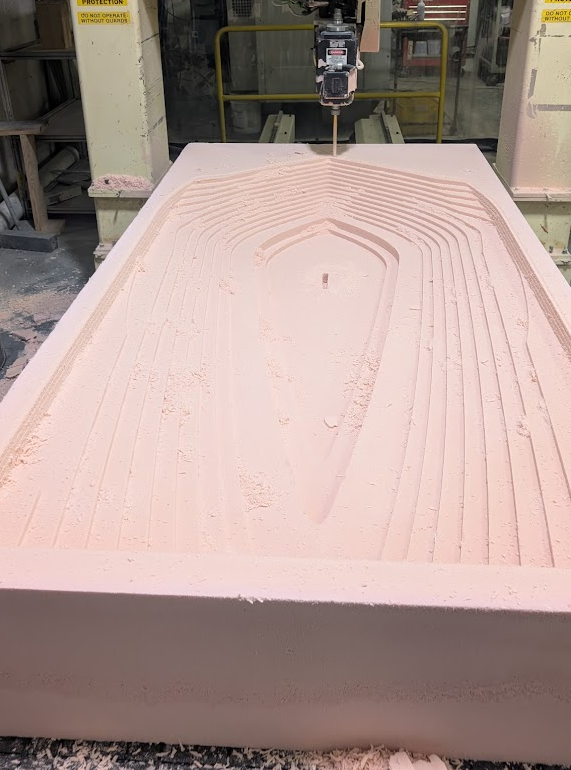
Molds were machined, then low spots or imperfections were filled with a fairing compound known as "Bondo" and carefully sanded back to a flat, fair surface. In some cases, this took several iterations to get a surface we were happy with.
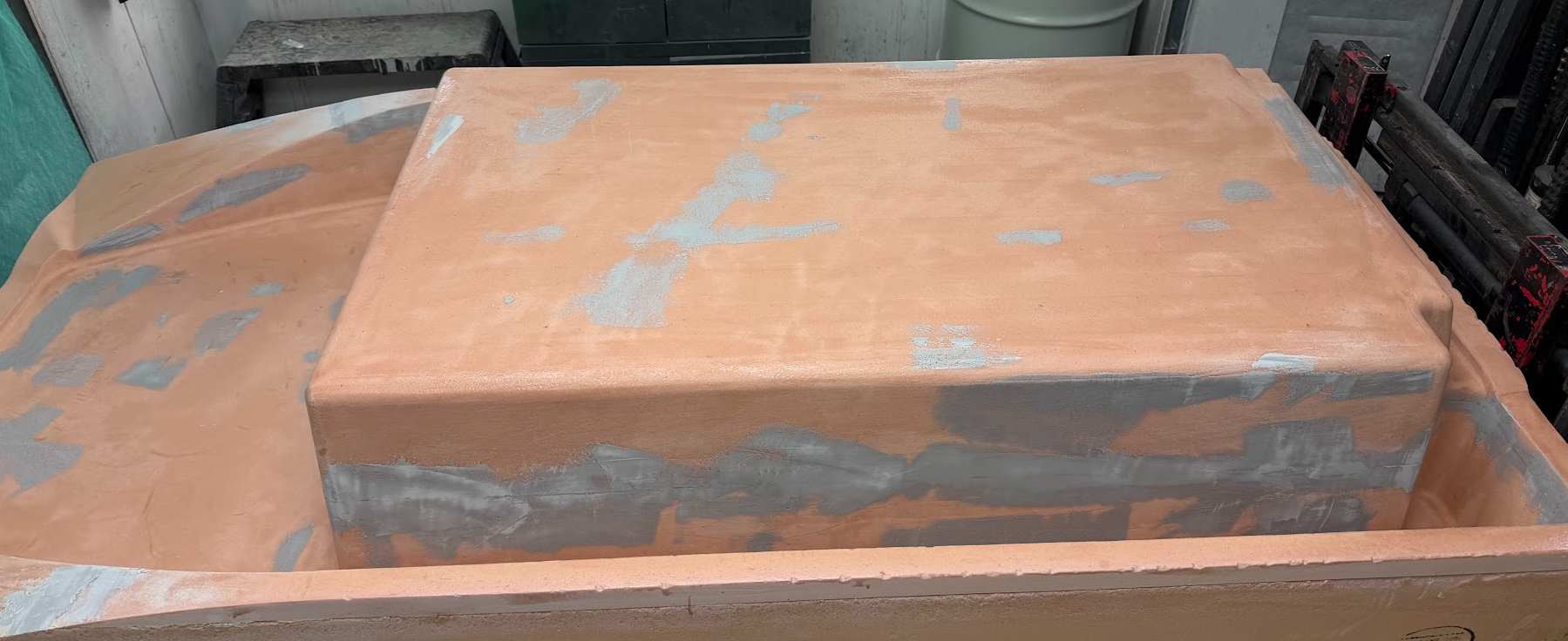
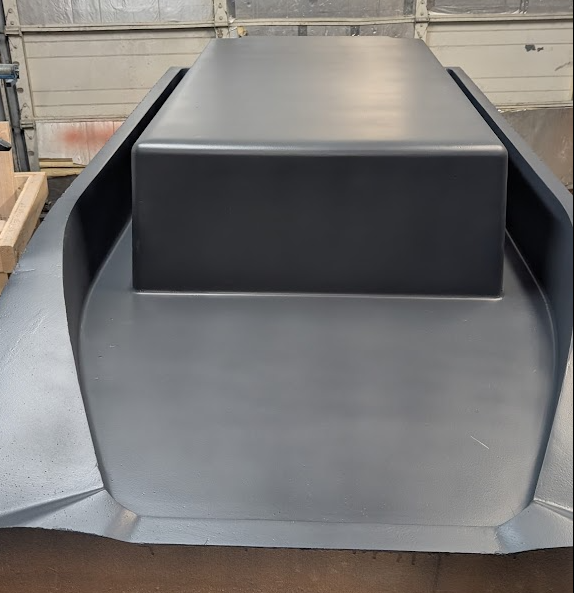
Then the molds were primed, painted, wet sanded, had several layers of mold release wax applied to them. Finally, they were sprayed with 'Gel Coat', which is a durable and high quality pigmented outer coating for the fiberglass.
At this point the layup process began, where dry fiberglass fabric and sheets of thick 'core' material were cut and laid into the molds. Sheets of 'breather' material and spiral cut tubing are added to enable epoxy resin to flow throughout the part during infusion. And finally, vacuum bag material was laid over top and sealed to the mold to create an airtight envelope that would help compress the laminate and pull resin throughout the part.
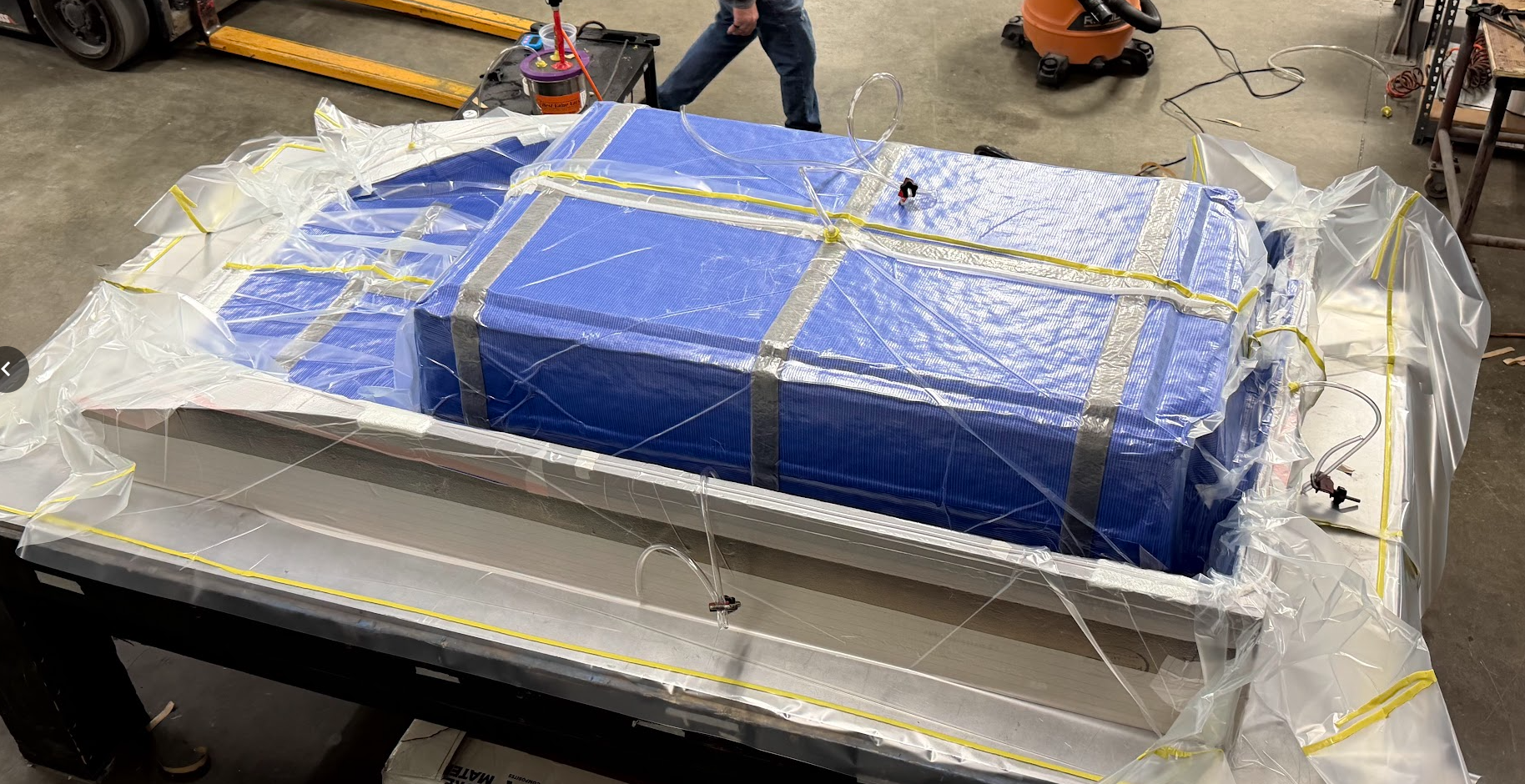
Resin infusion took just over an hour, and more than 3 gallons of resin went into each part. The finished parts were left to cure overnight, demolded, and trimmed the following day. As you can see, one of the molds didn't survive the de-molding process! Little Tahoma is therefore a totally unique, one-off prototype. It also meant that from here on out, if we made any mistakes that damaged one of our parts, we would have to start over all the way back at 0 with making new molds.
The next step was to bond the two parts together with expanding closed-cell polyurethane foam, one of the most uncertain and nerve-racking parts of the whole build. But, it is also one of the key technologies and enablers for our design to be strong, safe, and efficient to produce, and proving that we could do it was one of the main goals of the Little Tahoma prototype program. We did some test pours in the gunnels to dial in the correct ratio of the two chemical constituents, as well as determine the correct volume ratio of initial liquid mix to final expanded volume.
Using these numbers we calculated how much total mix and how much of each chemical component we needed to fill the entire trapped volume between the two parts. We checked the math 3 times, and after rehearsing the choreography of combining the two components, mixing, pouring, positioning the two parts together, and clamping everything down, we went for the real pour.
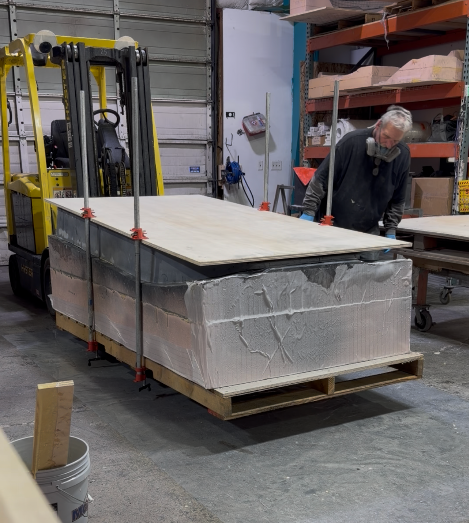
So far, so good, everything according to plan. Then, as we looked on through small gaps in the parts, powerless to stop it, the angry mass of rapidly expanding foam grew and grew, first squeezing out through the gaps, and then with a creaking and mighty BANG, expanded so forcefully that the clamps sheared through the 5/8" sheet of plywood holding everything together.
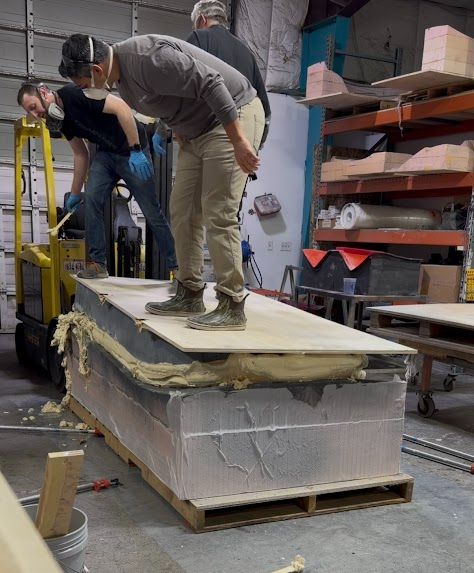
3 people jumping on it was not enough to compress the parts back together. Someday this photo will hang in the Alki Watercraft headquarters.
With the foam rapidly cooling and curing, we decided the best course of action was to pull everything apart, scrape out the old foam, and rethink our life choices.
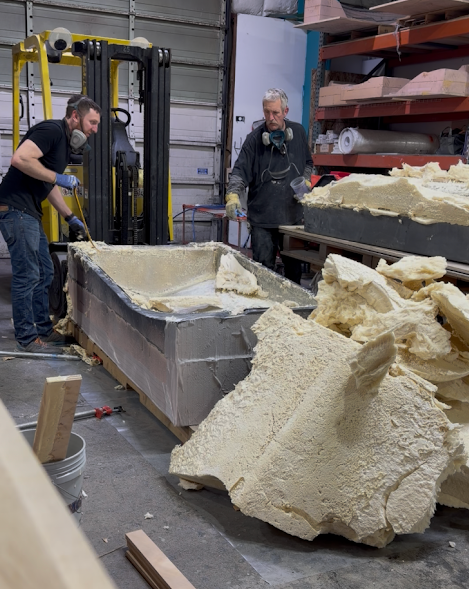
After some careful re-analysis and review of the slow-motion footage, we determined that we had used too much liquid foam mix (duh!), but also that our original math using the ratios from the test pours was correct. The real root cause was that the test pours were relatively small quantities, roughly 2 quarts, and the foam has a very real, non-linear relationship between expansion ratio and temperature. The larger the quantity of foam you mix, the hotter it gets, and the more it expands. When we mixed over 10 gallons to fill the entire hull, we had a massive spike in heat and much larger than expected expansion ratio. Once we figured this out and did more research, we calculated a new expansion ratio and liquid foam volume, and the second pour was much more successful. This is why we test and why we have prototypes!
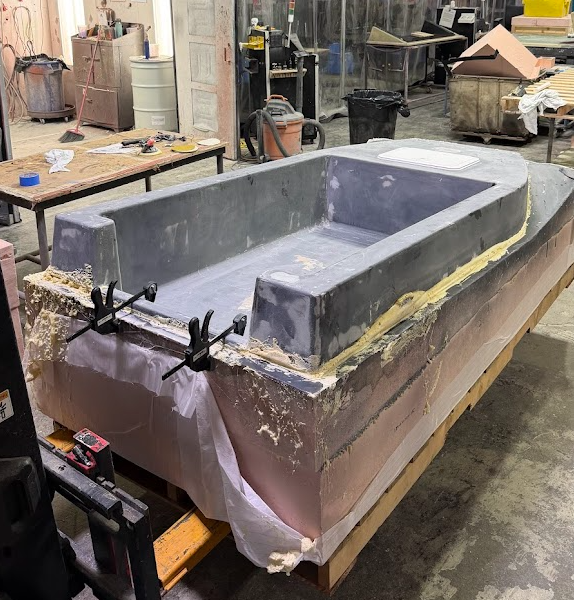
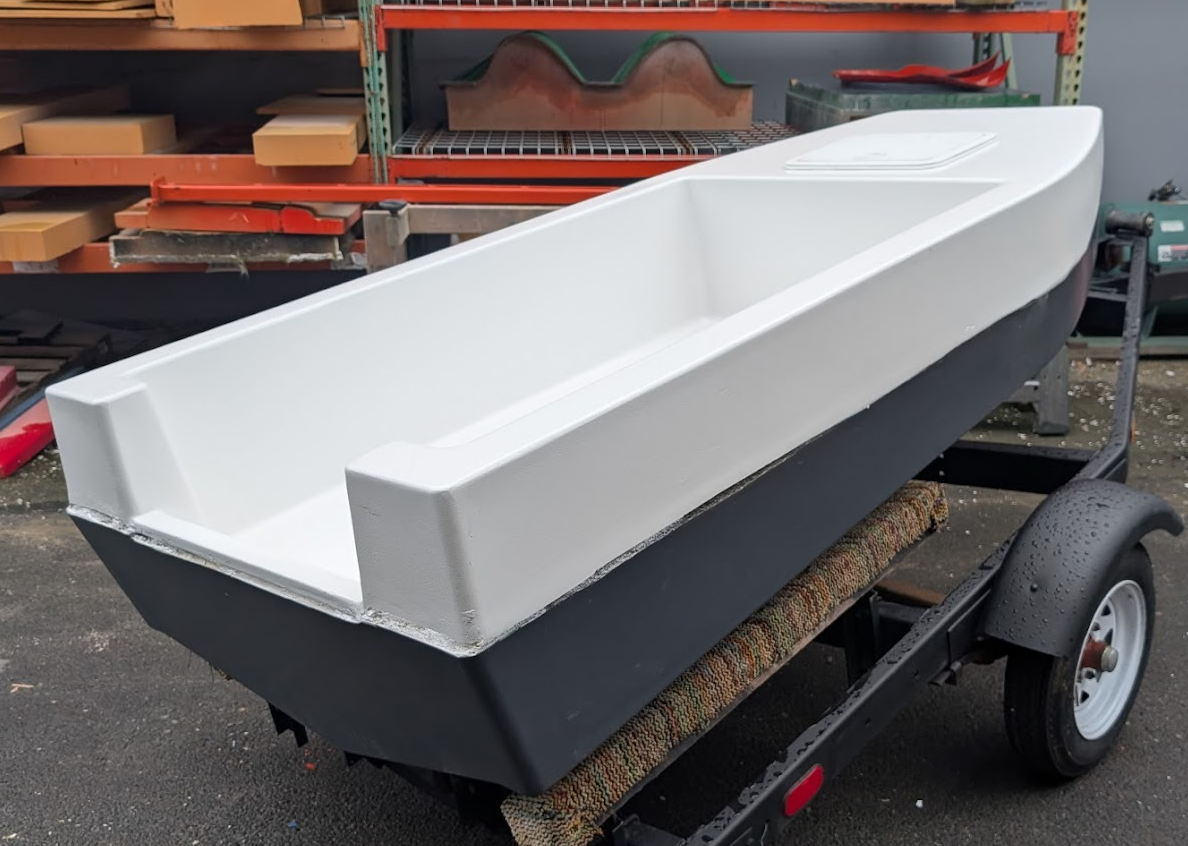
Once we removed the now unified boat from its supporting mold, we were happy to find that it felt rock solid with the thick fiberglass laminate and solid foam fill, and weighed just under 100lbs, right on target according to the design. One more round of finishing work and paint, and Little Tahoma was ready to have it's motor fitted and begin testing.
THANK YOU for sticking with the story this far! We know many of you are eager to hear about and see the first production models - rest assured that we are continuing to work on finalizing the designs and the company as a whole, and we will continue to share updates and progress as it happens! Stay Tuned!